
Even
Even is an expense splitting app. Snap a receipt, see the split, settle up.
Overview
Expense apps bury the one thing you came for. Even is a bill splitter: snap a receipt, see the split, settle up. It's also an experiment: how far a designer can take a real product alone, with AI writing the code I can't. Not a prototype. The whole thing: receipt parsing, haptics, accessibility, the App Store bar. The app I wanted to use and the question I wanted to answer, wearing the same coat.
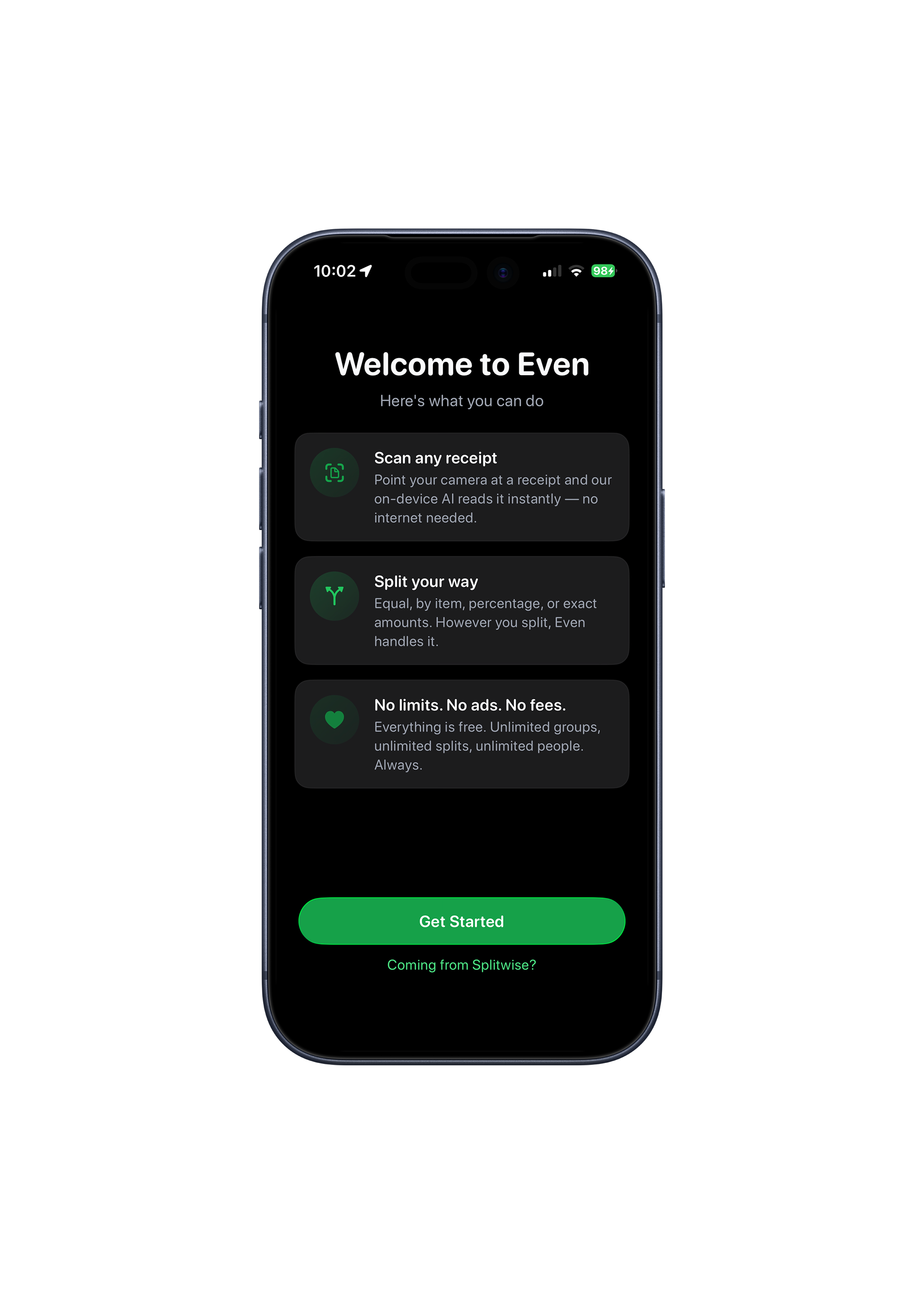
Welcome: what Even does, in three lines.
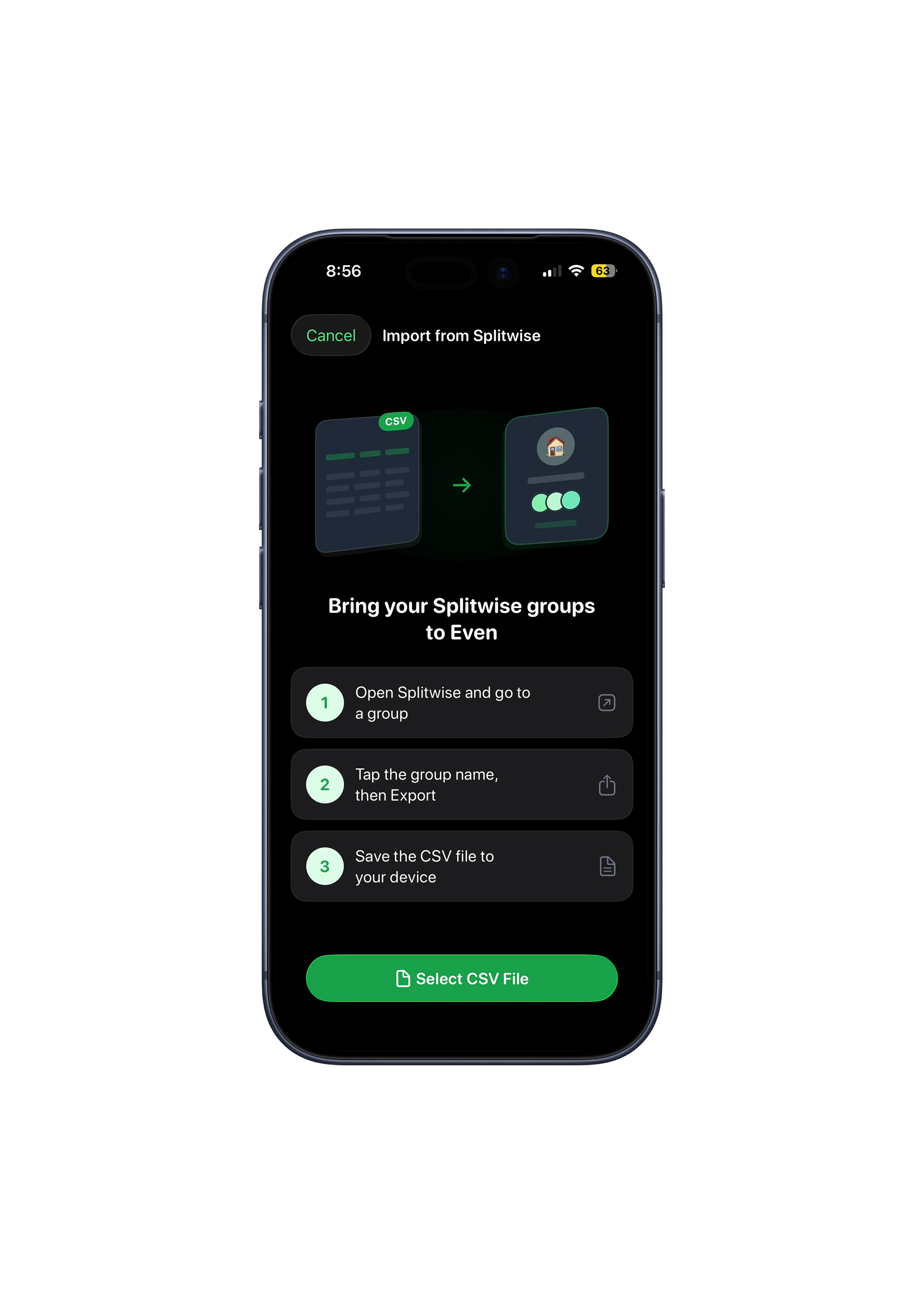
Bringing your groups over from Splitwise.
Where it started
A group trip. Six people, a stack of receipts, and someone with a calculator app doing math nobody wanted to double-check. By the end of the week the group chat was half jokes, half spreadsheets.
I wanted the opposite. Point your camera at the receipt, tell Even who was there, done.
And I had a second itch. Splitting a bill is a small, well-shaped problem. Small enough to actually finish, which made it the right place to ask a bigger one: with AI, how much of a real product can one designer carry?
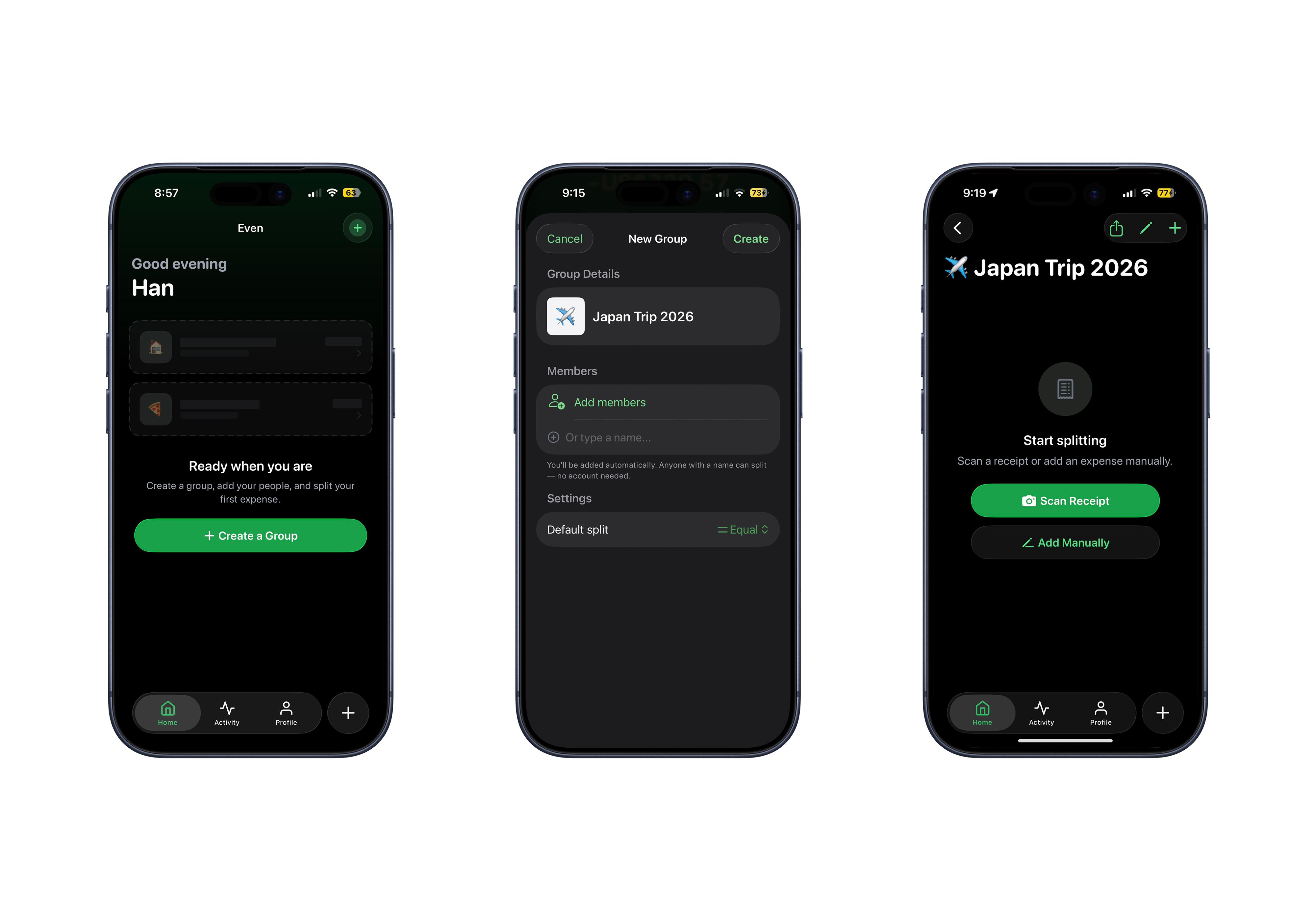
First run: a group, its people, then the first expense.
The design challenge
Two problems, stacked.
The product one: expense apps bury the thing you came for, under groups, friends, feeds, and nudges to upgrade. I wanted the hero flow to be one confident line, scan then assign then settle, and everything else to be scaffolding around it. The scan had to feel like magic without pretending it's infallible, because receipts are messy. So the results screen shows what it found, lets you fix anything, and never makes you start over.
The build one: I'm a designer, and AI would write the Swift. That sounds like a shortcut, and in places it is. But it moves the hard part rather than removing it. AI will write you a settlement animation in thirty seconds. It will not tell you the animation is worth two more days, or notice that a green amount and a red amount look identical to someone who's colour blind. It builds the easy version of every screen and never mentions there was a better one.
That gap turned out to be the whole job. The slow part was being the one who says no, do it again, this isn't it yet. Every amount ended up carrying a symbol and an arrow, not just a colour. Every animation got a Reduce Motion fallback. Every tap, toggle, and settlement got its own haptic. None of it something AI volunteered. All of it design.
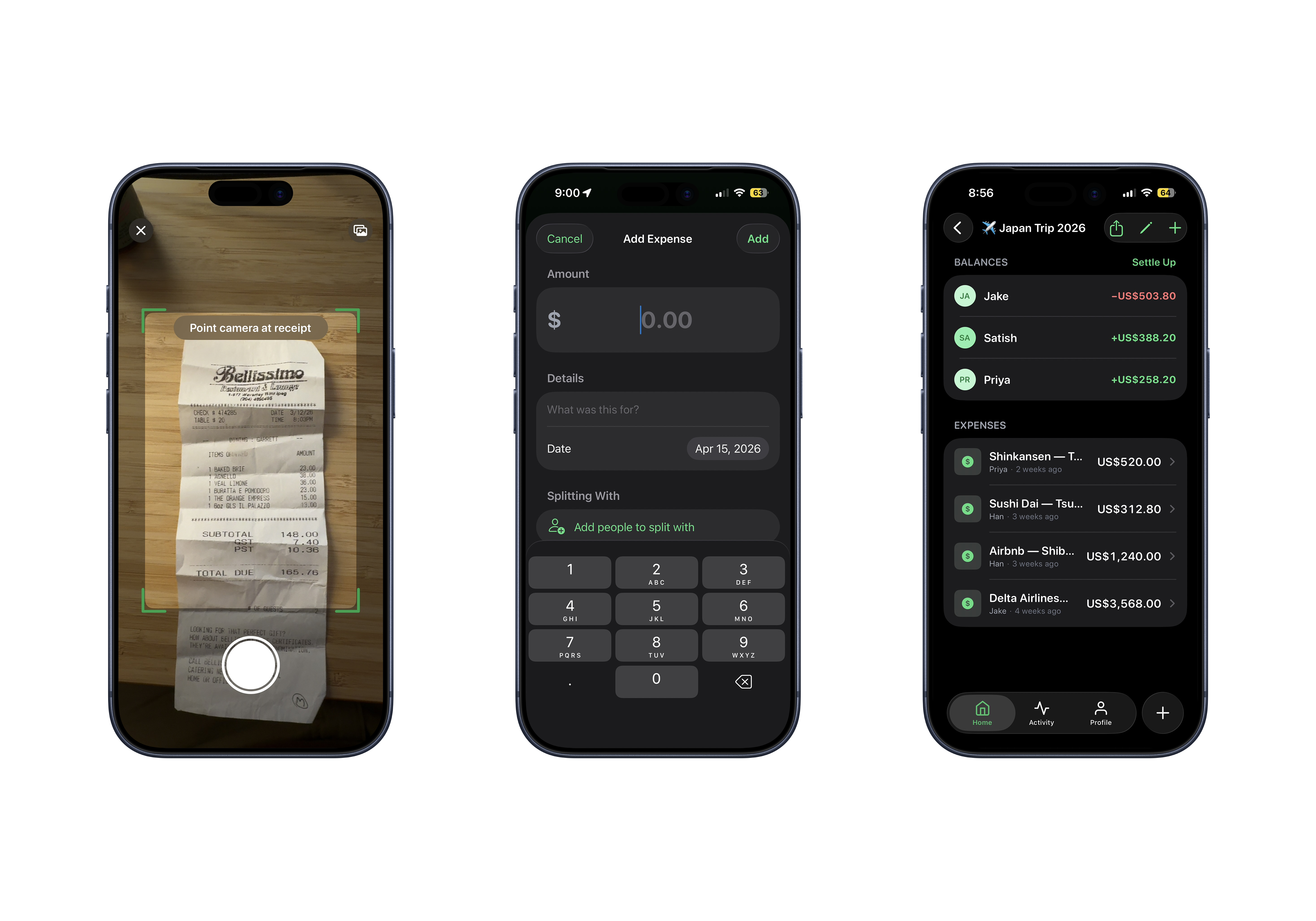
Scan the receipt, add the expense, see who owes what.
What it grew into
Even became a small, opinionated thing. Monochromatic green. SF Pro Rounded. No ads, no limits, no paywall waiting to spring. The opposite of the app it was a reaction to.
The part I'm proudest of is the smallest. When a group finally squares up, the equals sign pulses, a line fades in that reads you're even, as it should be, a bell plays, and a haptic crescendo runs under your thumb. It lasts about a second and is wildly disproportionate to its function. That is the point. The whole reason to split a bill is to get back to being even with your friends, and that moment deserved more than a toast. AI built every frame of it. It would never have argued for it.
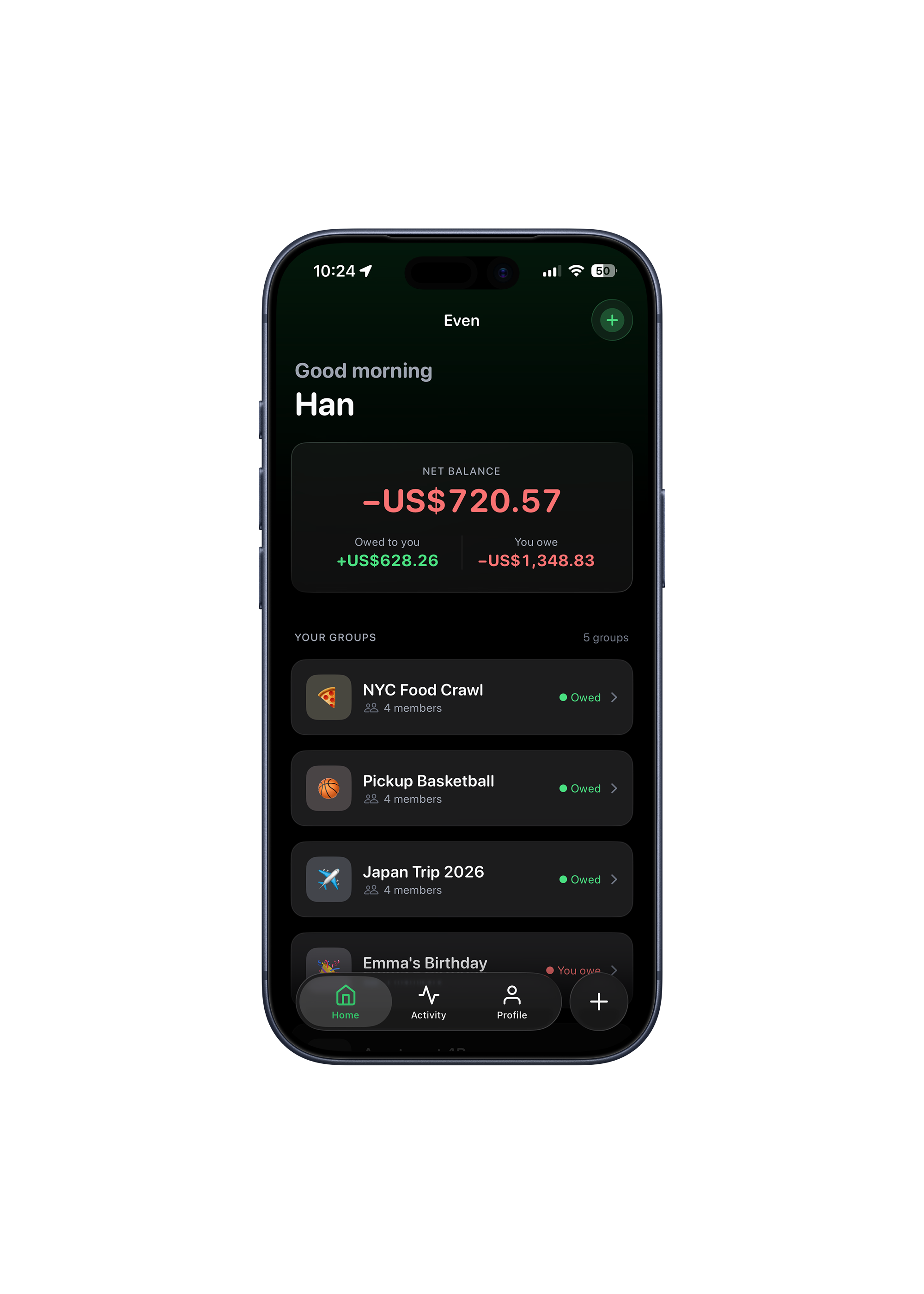
Home: net balance first, then groups.
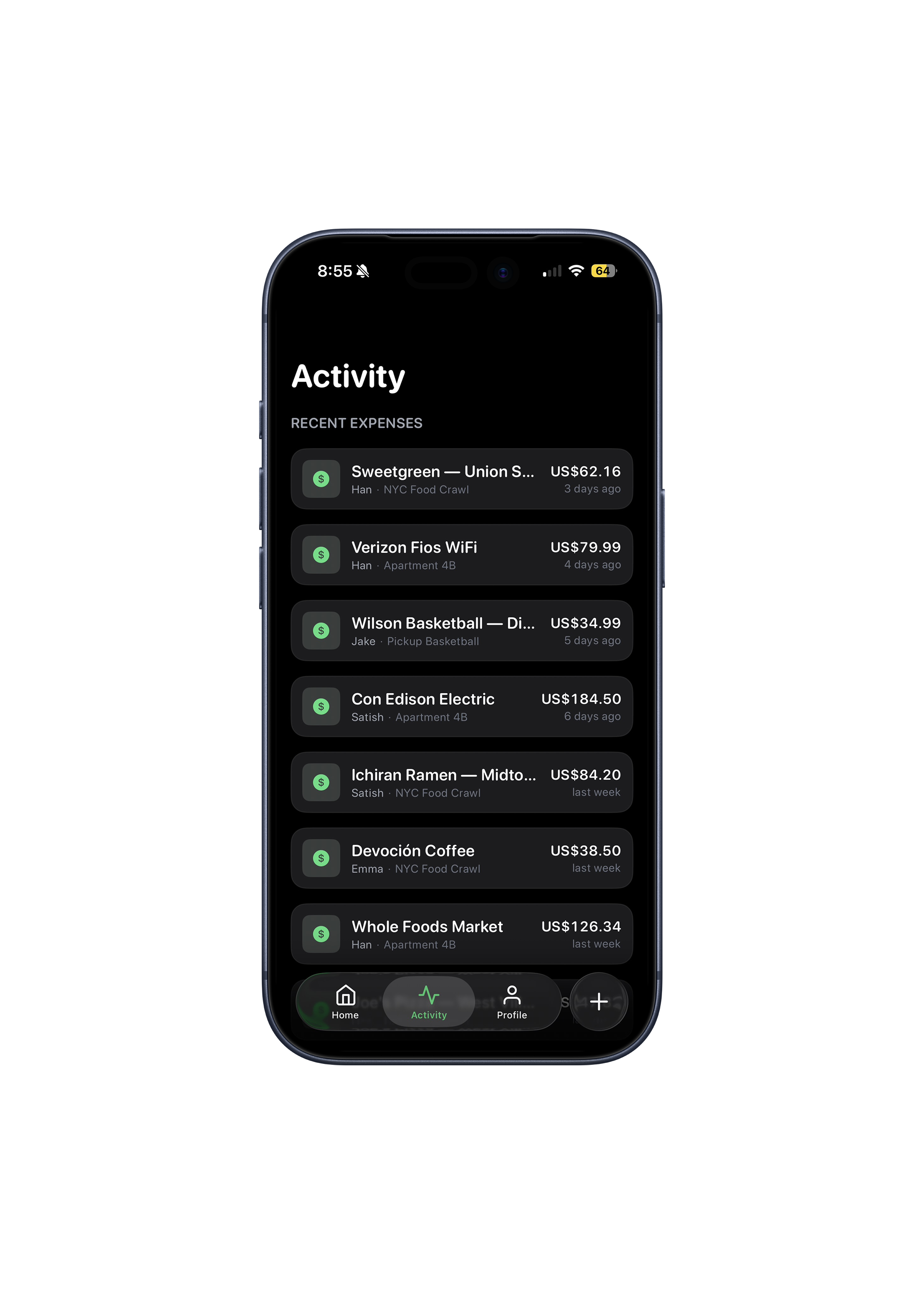
Activity: every expense, most recent first.
Outcome
- A complete iOS app: on-device receipt scanning, splits by item, percentage or exact amount, settlement, a haptic on every action, Reduce Motion fallbacks, amounts that read without colour. Built to the App Store bar.
- Not shipped, by choice. Splitting a bill belongs next to the money, in the wallet you already carry, not in a standalone app you have to talk your friends into downloading. The platforms will get there; they're closer than they look. I'd rather be early and right about where this should live than ship something the operating system is about to make redundant.
What I learned
AI closes the gap between designing a thing and building it. For a designer working alone, that is new, and freeing. I built things I could never have built by hand.
What it doesn't close is the gap between building it and building it well. That gap is taste, standards, and the willingness to redo work nobody asked you to redo. It is still, exactly, the design job. The tool got faster. The judgment didn't move.
I didn't build Even to win a market. I built it to find out what's left of the design job when the building gets easy. Turns out it's most of it.